

According to concrete coating industry data, standard liquid garage floor coatings fail at a rate of up to 30 percent when applied by do-it-yourself (DIY) homeowners. This high failure rate stems from unforgiving surface preparation requirements and invisible moisture vapor transmission rising through concrete slabs. For many property owners, a weekend project meant to elevate their home quickly turns into an expensive, peeling frustration.
To bypass these chemical risks and avoid the high costs of hiring professional contractors, homeowners are turning to dry, interlocking flooring systems. The SnapGRID® Stone solid PVC tile system offers a reliable alternative. It combines the clean, high-end appearance of a polished epoxy floor with the heavy-duty durability of stone, requiring zero specialized tools or complex chemical mixing.
Key Takeaways
- Avoid Coating Failures: Bypasses the common 30 percent failure rate of liquid garage coatings by utilizing a durable, dry PVC tile system.
- Subfloor Versatility: Installs directly over concrete, plywood, or compacted dirt without requiring specialized surface profiling.
- Vital Acclimation Period: Requires a 48-hour environmental acclimation period on-site to prevent post-installation expanding or shifting.
- Adaptable Methods: Supports a simple loose-lay approach for typical residential use or a taped/glued method for heavy commercial loads.
- Rapid Installation: Easily sized and locked together in a single afternoon using standard household tools like a jigsaw.
The Advantages of Interlocking PVC Over Liquid Coatings
Traditional liquid epoxy relies on a flawless mechanical bond with concrete. Achieving this bond requires diamond-grinding the slab to open its pores, a process that is loud, dusty, and difficult to execute without commercial-grade machinery. Furthermore, if the concrete slab has high humidity, moisture pressure from below will inevitably bubble and lift the cured coating over time.
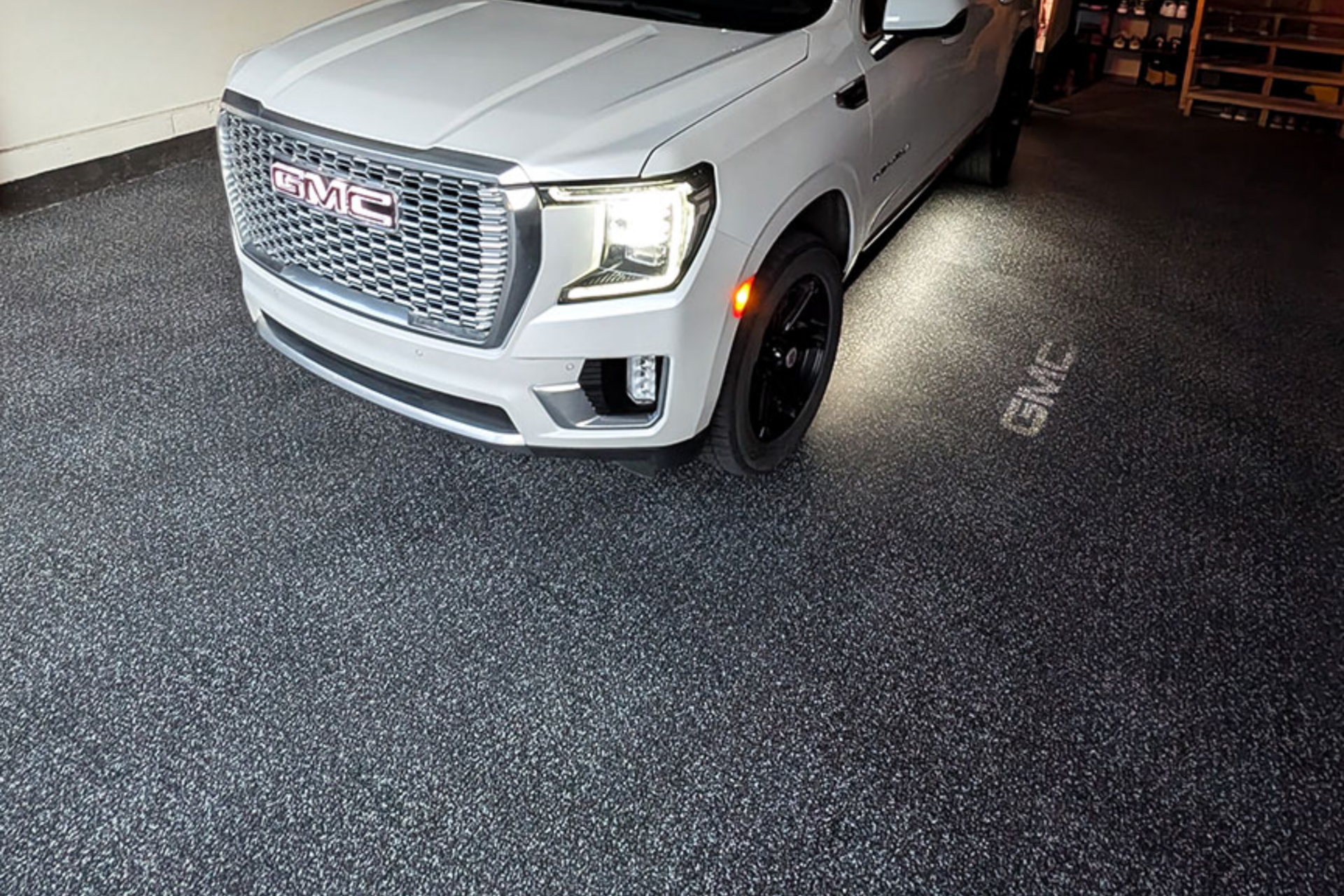
SnapGRID® Stone interlocking tiles eliminate these vulnerabilities. These large-format, 25-inch by 25-inch solid PVC tiles withstand extreme impacts, chemicals, and vehicle loads without cracking. Because they are not bonded chemically to the floor, they remain unaffected by minor subfloor moisture or shifts, providing a clean, non-porous, and slip-resistant surface that looks identical to a professionally poured commercial floor.
Planning, Layout, and the Crucial Acclimation Period
A successful DIY installation begins with precise layout calculations and proper material acclimation. To plan the layout, measure the garage’s width and length to calculate how many full 25-inch by 25-inch tiles will fit. If the remaining space along the walls is less than half a tile, shift the starting point so that the perimeter borders are balanced and equal on opposing sides of the room.
Once the tiles arrive, they must acclimate flat on the garage subfloor for a minimum of 48 hours before installation. Solid PVC expands and contracts slightly in response to temperature and humidity variations, allowing the tiles to adapt to the garage’s specific climate beforehand.
Preparing Your Subfloor
One of the greatest benefits of the SnapGRID® STONE system is its ability to install over diverse subfloors without intensive preparation.
For concrete subfloors, there is no need for acid etching or diamond grinding. Simply sweep or vacuum away any dirt, oil residue, loose concrete, and debris. Minor cracks or uneven spots do not need to be patched, as the rigid PVC tiles easily span small imperfections.
For plywood subfloors, ensure that all wood panels are securely fastened to the joists below to prevent vertical deflection. The surface should be flat, dry, and clean.
Even compacted dirt can serve as a suitable subfloor, provided the ground is fully leveled, cleared of large rocks, and firmly compacted. The interlocking structure of the tiles distributes weight evenly, making them highly effective even on non-traditional bases.
Step-by-Step Installation Breakdown
Once the 48-hour acclimation period is complete, start from the pre-calculated center line and lay the first row of tiles. Align the interlocking tabs and use a non-marking rubber mallet to gently tap the seams together. The precise engineering of the interlocking joints ensures a tight, seamless fit that prevents dirt and liquid from slipping underneath.
As the installation nears the walls, cuts will be required. Measure the remaining distance from the last full tile to the wall, subtracting approximately one-quarter of an inch to allow for a small expansion gap. Transfer these measurements to the tile using a straightedge and a marker.
To see how quickly this process moves, consider the Kueflers, a family who upgraded their double garage with SnapGRID® Stone. They completed their entire installation, including all perimeter edge cutting, in just under three hours.
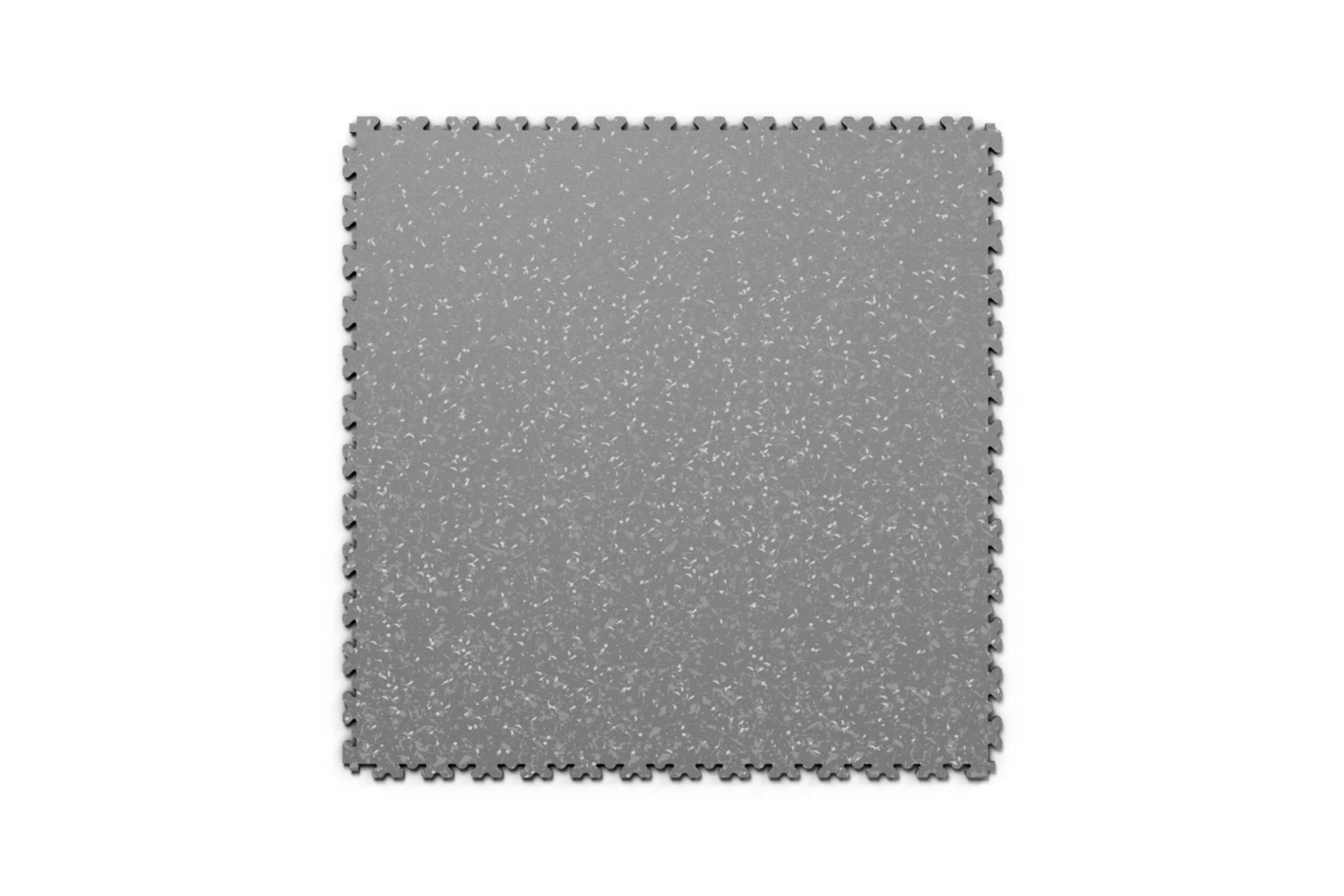
Using a standard household jigsaw, they easily trimmed the heavy-duty PVC tiles to fit around the walls and door frames, achieving a flawless finish.
Choosing Your Installation Method: Loose-Lay vs. Reinforced
Homeowners can choose between two primary installation methods:
The Loose-Lay Method
For standard passenger vehicles, light workshop tasks, or general home storage, a loose-lay installation is ideal. The weight and interlocking strength of the SnapGRID® Stone tiles keep the floor firmly in place without adhesives, making it a fast and completely reversible process.
The Reinforced Method
For areas subjected to heavy vehicle point loads, sharp turning, or commercial use, anchoring the tiles is recommended. Homeowners can use GatorTAPE® heavy-duty double-sided flooring tape along the perimeter and under main wheel paths to prevent shifting. For maximum stability under extreme loads, a high-quality commercial polyurethane adhesive (such as FAS1) can be applied to bond the tiles permanently to the subfloor.
Bringing It All Together
Achieving a premium, stone-look garage floor does not require the high labor costs of a professional contractor or the chemical risks of a DIY liquid epoxy kit. By choosing SnapGRID® Stone PVC tiles, homeowners can install a highly durable, chemical-resistant floor over concrete, wood, or dirt in a single weekend. Success relies on ensuring a balanced layout, allowing the tiles to acclimate for 48 hours, and selecting the right anchoring method for your vehicle loads.
Upgrade your garage renovation with SnapGRID Stone. Visit our product page to see what these PVC tiles can do for your space.
Sources
- Common Problems With Epoxy Garage Floors – Croc Coatings
- Epoxy Garage Floor Issues: 5 Shocking Reasons Floors Fail – Galaxy Concrete Coatings
- Why Do So Many Epoxy Floors Fail? What Actually Goes Wrong? – Bond Craftor
Content Integrity
This article was generated with the assistance of AI and edited by a human team member.


